0 to 30,000+ combined monthly organic sessions across 10 clinic websites in 18 months.
Source: projects led by Muhammad Waqas, 18 months.
A buyer in Saudi Arabia now reads an answer before a list of links, and the brand named inside that answer gets the inquiry. I get you named there, and found in the Google results underneath it. One senior consultant owns your account, a specialist team I lead ships the work, and every figure in your report comes out of properties you own.
Miss that answer and your buyer never reaches your website at all. Win it and the inquiry arrives already half sold.
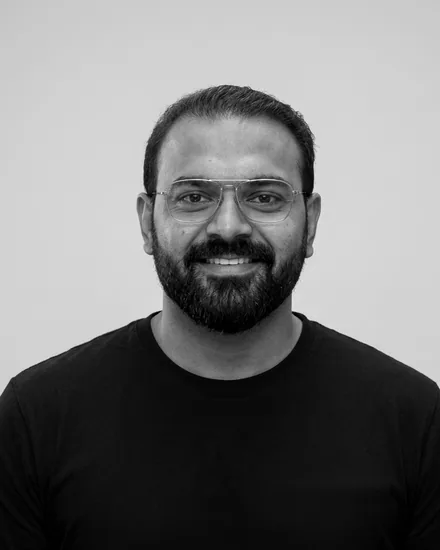
Muhammad Waqas takes the call himself.
Free 30 minute strategy call on Google Meet, Monday to Friday, US Eastern business hours. In Saudi Arabia that lands in an evening window, mapped to the hour further down.
0 to 30,000+ combined monthly organic sessions across 10 clinic websites in 18 months.
Source: projects led by Muhammad Waqas, 18 months.
Last updated November 2026
Three measured changes are moving Saudi search budgets this year: an AI answer now stands where your buyer used to click, Saudi businesses adopted AI faster than the suppliers selling to them, and the shortlist a buyer starts from is written by directories.
Each one is dated and sourced below.
Users who met an AI summary clicked a traditional search result on 8% of visits, against 15% of visits without one, and 18% of searches in that study generated a summary at all (Pew Research Center, 22 July 2025, browsing data from 900 US adults and 68,879 searches).
A position that used to buy a visit now often buys a mention instead, so the work has to win both.
One in three Saudi businesses was already running on AI in 2025: 33.1% of them. Your buyers changed how they search before most suppliers here changed how they sell.
Source: GASTAT's Establishments' ICT Access and Usage Survey, reported by Arab News, 14 June 2026.That is the demand driver behind this market. A buyer who already uses an assistant at work uses one to choose a supplier too.
Search for the best AI SEO consultant in Saudi Arabia and three of the eight organic results are lists that rank named firms or people. The rest are suppliers' own pages and a community thread.
So the shortlist a Saudi buyer works from is often somebody else's ranking of other suppliers. Hire the consultant directly instead. The record, the delivery, the reporting standard and the call window come from one person.
You get five pillars: AI visibility you can report to your board, pages built to be the answer a Saudi buyer is shown, crawling and indexing and migrations handled at the server level, an entity an answer engine can name without guessing, and a monthly report with its standard stated in writing.
Each pillar names what I do and what you receive.
This is my AI SEO services work delivered into one market as a senior engagement rather than a seat on a roster. I am Muhammad Waqas, AI SEO consultant, and the shape of yours is set on the free call.
I agree the prompt set with you before any work starts, read what ChatGPT, Gemini, Perplexity and Google say about your category today, and read the same prompts again every month.
You receive the baseline as a document and each monthly read beside it, so presence inside an answer becomes a line you report.
I rewrite the pages that already rank so every heading resolves its question in the first sentence, then build the pages your coverage is missing.
You receive a prioritized page list, the rewrites, a 40 to 60 word answer capsule under each heading, and a table or an FAQ wherever facts can be one.
An engine that cannot reach a page cannot quote it, so access is fixed first: crawler rules agent by agent, parameter and version URLs, indexation and index bloat, and migrations run with a complete redirect map.
You receive the applied fix list, the crawl findings ranked, and the redirect map as a file you keep.
One business, one entity, named identically everywhere it appears: on the page, in schema, in the entity files, and across both of your languages.
You receive the entity and schema baseline, the markup shipped and validated, and the third party places where your name has to agree with your site.
Every figure comes from your own Google Search Console property and your own GA4 property, AI visibility is reported as named prompts you can run yourself in ChatGPT, Perplexity and Google, and you get a call with the consultant who did the work. Domain rating, domain authority and brand traffic are never presented as results.
What you will see move, month by month:
The wider program this sits inside is the full SEO service list.
Muhammad Waqas takes the call himself.
Three results from engagements I led, each one carrying its scope, the work it took, the result and a source line you can hold me to.
When you hire a consultant you are buying a record, not a promise, and this is mine in full.
Eighteen months, one engagement, and ten clinic websites that read as one group instead of ten rivals.
ten clinic websites on one network, run as a single engagement across 18 months.
SEO and GEO strategy and execution across the network, treatment page architecture, and the entity and schema layer that keeps ten websites reading as one group.
over $100M in attributed client revenue across the portfolio, built on the organic growth above.
Source: projects led by Muhammad Waqas, 18 months.
Your engine stops spending its visits on version URLs and starts spending them on the pages you want quoted.
crawl budget work across every website in that set, spanning ten years in search.
parameter and version URL cleanup, indexation cleanup and custom schema. On the clinic website behind this card, CSS and JS version parameters were taking 54% of the crawl budget, and that share came back in full.
crawl spent on the pages the client wanted found, on every website in the set.
Source: projects led by Muhammad Waqas.
A migration at that size either keeps your rankings or costs you the year. Yours keeps them.
migrations of large websites running into thousands of pages.
a state level to city level URL directory restructure with a complete redirect map, shipped in one cutover.
every page landed on its new URL with its equity, which is the only acceptable outcome at that size.
Source: projects led by Muhammad Waqas.
The longer write ups live in my AI SEO case studies.
Every result above carries its scope, its period and its source line.
Muhammad Waqas takes the call himself.
Sixty three named items sit inside this engagement, in the five groups the work actually runs in: answer layer work, crawl and migration work, page and content work, schema and crawler access, and measurement.
Every line below is something done on your website rather than a category standing in for one.
Fifteen items, and most of this field sells the whole group as one word.
build the first prompt set out of the questions your sales team already answers on calls. Those are the questions an assistant is being asked about your category.
Twelve items, and they decide whether any of the above is reachable at all.
Nothing in the groups above reaches a reader until this group is clean, which is why it runs first in every engagement I take.
put your log files next to your sitemap before anybody rewrites a word. The pages an engine spends its visits on are rarely the pages you most want quoted.
Eleven items, worked query by query rather than page by page.
put the answer in bold, never the keyword. An answer engine lifts the sentence that resolves the question, and a buyer scanning on a phone stops at exactly the same sentence.
Fourteen items, and not one page ranking in this market names a single crawler.
check AI crawler access before you commission content. It is the cheapest thing in this discipline to get right, and a blocked agent cannot quote a page you paid for.
Eleven items, every one of them inside an account you already own.
ask which property a figure came from before you ask what the figure says. A number you can open yourself, in your own account, is the only kind worth a board pack.
Getting a Saudi brand named inside an AI answer takes three things: facts an assistant can quote, access for the crawlers that read you, and a plan weighted to the engines this market actually uses.
It runs as a named part of my AI SEO services with deliverables of its own, never as an add on to something else.
Generative engine optimization, GEO, is the work of becoming a source a generated answer is built from and names. Answer engine optimization, AEO, is the narrower job of being the direct answer to one question. The deeper service side is my generative engine optimization services.
Entity clarity and schema come first, because an engine cannot name a business it cannot resolve. I fix how your brand, your services and your numbers are stated on the page and in markup so each reads as a fact rather than a claim, then make the sentences themselves liftable in one piece. The content system behind that is built rather than borrowed: an 11 stage AI content pipeline with anti pattern detection and automated quality scoring, holding an 8 out of 10 gate across six metrics, across 850+ pages.
Access is read agent by agent, not as one robots.txt line: GPTBot, PerplexityBot, ClaudeBot and Google-Extended each get an answer you chose, llms.txt ships and stays current with every release, and Bing indexing is confirmed because more than one assistant answers through it. You get a named prompt set you can run yourself in ChatGPT, Perplexity and Google, a baseline read of what each one says about your category today, and the same prompts read again every month.
In October 2026 Google Gemini held 42.23% of AI chatbot share in Saudi Arabia. ChatGPT held 39.88%, and Google answered 96.09% of Saudi searches. One month earlier ChatGPT held 74.67% and Gemini 16.86%. The graphic beside this carries all twelve months, because one month is a direction and not a verdict. So a Saudi plan weights Google's own AI surfaces and ChatGPT together.
Source: StatCounter Global Stats, Saudi Arabia, read 18 November 2026, which measures page views rather than people.
A Saudi buyer switches language by task, so this is one structure in two scripts rather than two websites: en-SA and ar-SA hreflang, a self referencing canonical for each language, and research run in both.
Eleven of the fifteen pages ranking in this market talk about working in Arabic. Two carry both an ar-SA and an en-SA value.
Your brand is one entity whichever script it appears in, and an engine has to be able to resolve it either way. I fix the brand name, the service names and the descriptive line so they agree across both scripts and inside your markup, then make the language versions point at each other with hreflang return tags and an x-default for everybody outside both. You receive the naming decisions as a document and the markup shipped with them.
Not every page earns one, and translating the whole website wholesale is how duplicate and canonical problems start. The decision runs on demand and intent, query by query: money pages and the questions a buyer asks before buying usually earn an Arabic version, deep reference pages often do not. You receive the list of which pages get one, in which order, with the duplicate and canonical risks named beside each.
Query research runs in Arabic and in English, on google.com.sa as well as google.com, because the two sets do not overlap as neatly as a translation suggests. The agreed prompt set is read in both languages too, since an assistant does not always answer a question the same way in each. My own languages are stated plainly: English (full professional), Urdu (native), Arabic (working knowledge), and the Arabic writing itself sits with a native speaker.
A Saudi engagement runs as a senior remote engagement on your clock: calls land in a Saudi evening window, I own the account and direct the work, and a specialist on my team ships it.
The window, the week to week shape and the six situations it is built for are all below.
| Half of the US year | The call window, US Eastern | The same window in Arabia Standard Time |
|---|---|---|
| The US winter half | 08:00 to 16:00, Monday to Friday | 16:00 to 24:00 |
| The US summer half | 08:00 to 16:00, Monday to Friday | 15:00 to 23:00 |
Calls run Monday to Friday, 8:00 to 16:00 US Eastern, which is 16:00 to 24:00 Arabia Standard Time while the United States is on standard time and 15:00 to 23:00 while it is on daylight time. Arabia Standard Time is UTC+3 all year and Saudi Arabia keeps one clock, so the window moves by an hour twice a year because the American clock changes, never because yours does. Monday to Thursday slots sit before the Saudi weekend, which has been Friday and Saturday since 29 June 2013 under Royal Order No. O/185. Friday's slots fall on it, the last of them ending as Saturday begins, and there is no Sunday slot. Three of the eight daily hours sit at or before 19:00 Arabia Standard Time in the US winter and four in the US summer. Engagements are invoiced in US dollars.
I own the account, the strategy and the decision about what gets done first, and I am on every call. A specialist on the team I lead executes inside that plan, so the team scale behind the engagement is a fact about capacity rather than distance. Week to week you get work shipped against an agreed order, a written note of what moved, and one named person who already knows your website.
Six situations, and the first move is different in each:
An in house marketing lead who needs AI visibility reported upward.
First move a baseline across the engines, in a form that goes into a board pack.
A multi location group whose branch websites compete with each other.
First move a coverage read across the branch websites, listing every page competing for one query.
A website that has just migrated, or lost traffic after an AI answer appeared above it.
First move a crawl, index and redirect check against the pages that lost the traffic.
A business whose previous supplier reported rankings that did not convert.
First move a read of the queries that convert, set against what was being reported.
You sell in Arabic and English, and only one of the two ranks.
First move a coverage read of every money page in both languages, with the canonical risks listed.
An assistant answers questions about your company with the wrong facts.
First move an entity and citation check across ChatGPT, Gemini and Perplexity, naming the sources each one pulls from.
Six steps, dated across the first 90 days and then a rhythm, and every one ends in something you keep.
Nothing here waits on a signed contract to get specific: step one produces findings about your own website.
Thirty minutes on Google Meet inside the window above. I open your own robots.txt live and tell you whether the assistants may read you at all, which of your pages answer in their first sentence, and the first entity gap I can see.
Deliverable: those three findings in writing, and the scope by the end of the week.
The facts everything else gets ordered by: the entity and schema baseline, the AI visibility baseline across your agreed prompt set, and a content coverage read in Arabic and English. Access is measured here too, agent by agent, before anything is rewritten.
Deliverable: three documents you keep, plus the publishing order agreed with you.
Access first, because it is the fastest thing on this list to change: crawler rules corrected, llms.txt shipped, parameter and version URLs cleaned, index bloat cut, and the redirect chains that were quietly eating crawl removed.
Deliverable: the applied fix list, the crawl findings ranked, and your redirect map.
Answer shaped rewrites on the pages that already rank, the first new pages live, the schema layer shipped, and the bilingual structure put in place page by page. The order comes out of the coverage read rather than a template.
Deliverable: the rewrites and the new pages, each signed off before it ships.
The first full read against the baseline: impressions and clicks on your commercial queries, conversions in your own GA4 property, and the agreed prompt set read again so citation presence is a measured line rather than an impression.
Deliverable: the first monthly report and the call that walks you through it.
From here the compounding half carries the account: wider coverage, brand mentions and citations, and whatever migration or crawl work the website still needs.
Deliverable: the monthly report, the monthly call, commercial queries held.
Three industries, and the record behind each one is real: clinic groups running several branch websites, food and restaurant brands, and websites of thousands of pages where the job is migration and crawl.
I take the work where the proof already exists rather than listing every sector a buyer might sit in.
Multi location clinic groups are the deepest part of the record: treatment pages built to answer rather than describe, and branch websites structured so they stop competing with each other for the same query. Every treatment page is sourced before it ships. The entity work keeps one group reading as one business across every branch website.
Food, restaurant and catering websites grown, which here means menu, location and service pages that answer the question a buyer puts to an assistant, plus the entity work that keeps one brand from reading as several. Same discipline as the clinic record, on a much shorter buying cycle.
Large websites are a different job: migration and crawl rather than content, run so the move costs you nothing. On a website that size the first question is never what to write. It is which pages an engine reaches at all.
A Saudi business buying this work has three real options, and in this market the third column is the one a directory rarely shows you: an agency, a shortlist written by a directory, or a senior consultant you hire directly.
The table compares what you get in each, row by row.
| What you are buying | An agency | A directory shortlist | A senior consultant |
|---|---|---|---|
| Who owns the thinking | An account team, with the senior name on the pitch | Whichever supplier you pick off the list | One named consultant, on every call |
| Who assembled your options | The agency's own marketing | The publisher who compiled the list | Nobody: you are reading the record itself |
| Who you speak to in a review | An account manager | The supplier you picked | The consultant who did the work |
| AI visibility in scope | Usually an add on | Whatever each listing states | A named prompt set, a baseline and a monthly re read |
| Bilingual structure | Sometimes, as a translation line | Rarely stated in a listing | en-SA and ar-SA hreflang, one entity in two scripts |
| Where the figures come from | The supplier's dashboard | Each listing's own case page | Your own Search Console and GA4 properties |
| What counts as a result | Often a visibility score | Whatever the listing chose to show | Impressions, clicks, conversions and citation presence |
| What you keep at the end | The reports | Whatever that supplier hands over | Every document, the markup and the redirect map |
That third column is the engagement I run, and the shapes it comes in are set out on my SEO consulting services page. Choosing it is a decision about seniority and ownership rather than about headcount.
One named consultant owns the account and is on every call.
Book a free 30 minute strategy callMuhammad Waqas takes the call himself.
Businesses choose me on four specifics, and every one of them is checkable: ten years in search, a senior consultant owning the engagement with a specialist team delivering, a reporting standard stated in writing before the first invoice, and four named certifications.
A decade in search, across clinic and healthcare groups, food and restaurant brands, parking management and ecommerce.
Thousands of keywords ranked for clients in that decade, and around 50 hijacked websites recovered. The technical half of the record sits in the cases above.
80+ specialists led across twelve teams and 20+ concurrent projects, which is why a senior engagement here is not a smaller one. The strategy, the order of work and the calls are mine, and the delivery has a bench behind it. You can read the career behind both facts about Muhammad Waqas.
Your reporting standard is agreed in writing before the first invoice.
Every figure I hand you names the property it came from and the period it covers. A figure without a source does not reach your report.
Four certifications, exactly:
Google Analytics Certified, HubSpot Inbound Marketing, HubSpot Content Marketing and SEMrush SEO Toolkit. The reporting itself comes out of your own Google Search Console property, your own GA4 property, and named prompts you can run yourself in ChatGPT, Perplexity and Google.
Fifteen pages rank in Saudi Arabia for this work. I checked every one of them, and three findings set the standard your engagement is held to.
Each count below is out of those fifteen.
Access and structure.
Of the fifteen pages ranking in this market, none names a single AI crawler and one attributes a market figure to a named data source. Your site gets both: crawler access stated for GPTBot, ClaudeBot, PerplexityBot and Google-Extended, an llms.txt file, and a source and a period beside every figure I publish for you.
Two languages, done in the markup.
Eleven of the fifteen talk about working in Arabic. One publishes more than twenty characters of it, and two carry both an ar-SA and an en-SA value. You get the pair, a self referencing canonical for each language, and query research run in both.
Where the demand is.
DataForSEO Labs, United States location: ten Saudi qualified consultant and expert phrases return no row at all, while the services and agency phrasings return ten searches a month each. Three of the eight pages ranking on this query were written and dated in October 2026 to answer who the best AI SEO expert here is. In this market the demand reaches the search results before a keyword tool can see it, so the plan is built for the search results.
Ten questions Saudi buyers actually ask before they hire an AI SEO consultant: the call hours, the cost, Arabic, citations in ChatGPT and Gemini, how long results take, and what I report.
If yours is not here, bring it to the call.
Judge it on the record rather than the claim, and mine is three results each carrying scope, work, period and a source line, four named certifications, and a reporting standard stated in writing before the first invoice. Hire on that record and you are hiring the person who will do the work.
Yes, and it runs on one named consultant owning the account end to end. I set the strategy and the order of work, I am on every call, and a specialist on the team I lead ships the work inside that plan. You hold the documents from every stage, the markup, the redirect map and a report built from your own properties. The engagement shapes are on my SEO consulting services page.
Pick any 30 minute slot between 16:00 and midnight Arabia Standard Time, Monday to Friday, which is the 8:00 to 16:00 US Eastern working day seen from your clock, and an hour earlier at 15:00 to 23:00 in the US summer half. Four of the five call days fall inside the Saudi working week, Sunday carries no slot, and the call itself runs on Google Meet.
The scope and the cost are both set on the free 30 minute call, once I have seen your website, your market and the state of your access and entity layer. What moves it is the number of websites, the number of languages, and whether month one is a migration or a build. You leave that call with the scope in writing.
Yes, as one structure rather than two websites: one entity named the same way in both scripts, en-SA and ar-SA hreflang, a self referencing canonical for each language, and query and prompt research run in both. Which pages earn an Arabic version is decided on demand and intent rather than translated wholesale, and the Arabic writing sits with a native speaker.
Yes, and the plan is weighted for the engines this market uses rather than a US default: in October 2026 Gemini led Saudi AI chatbot share, so Google's own AI surfaces carry at least as much of the answer layer here as ChatGPT does. The work is facts an engine can quote, access for the agents that read you, and the mentions that make you the named answer, inside my AI SEO services.
Month 1 produces the baseline and the applied access fixes, months 2 to 3 produce first movement and first citations, months 4 to 6 move head terms, and months 6 to 12 compound. How fast it runs comes down to the state of the website and the competition in front of it, and the six steps above say exactly what you hold at the end of each stage.
You get impressions, clicks and conversions from your own Google Search Console and GA4 properties, citation presence against your named prompt set, and a monthly call with the consultant who did the work. What that report will never call a result is a domain rating, a domain authority score or brand traffic. Every figure is one you can open in your own account on the call.
There is no single best, and the real choice here is between three ways of buying the work: a firm with an account team, a shortlist somebody else published, or a senior consultant you hire directly. The table above compares what each one gives you row by row, from who owns the thinking to what you keep at the end. Pick on ownership and on where the figures come from.
Yes, and it is consulting rather than a course: I direct your own people on your own website, set the standards they work to, and review what they ship. That covers answer shaped page structure, entity and schema practice, crawler access agent by agent, and the monthly prompt read. Your team keeps the capability when the engagement ends.
Book a free 30 minute AI SEO strategy call on Google Meet and leave it holding three findings about your own website: whether the assistants are allowed to read you, which pages answer in their first sentence, and the first entity gap. Nothing to prepare beyond one URL.
Book a free 30 minute strategy call orSend a message
Muhammad Waqas takes the call himself.
Calls run Monday to Friday in the Saudi evening window mapped to the hour above. Google Analytics Certified, HubSpot Inbound Marketing, HubSpot Content Marketing and SEMrush SEO Toolkit.